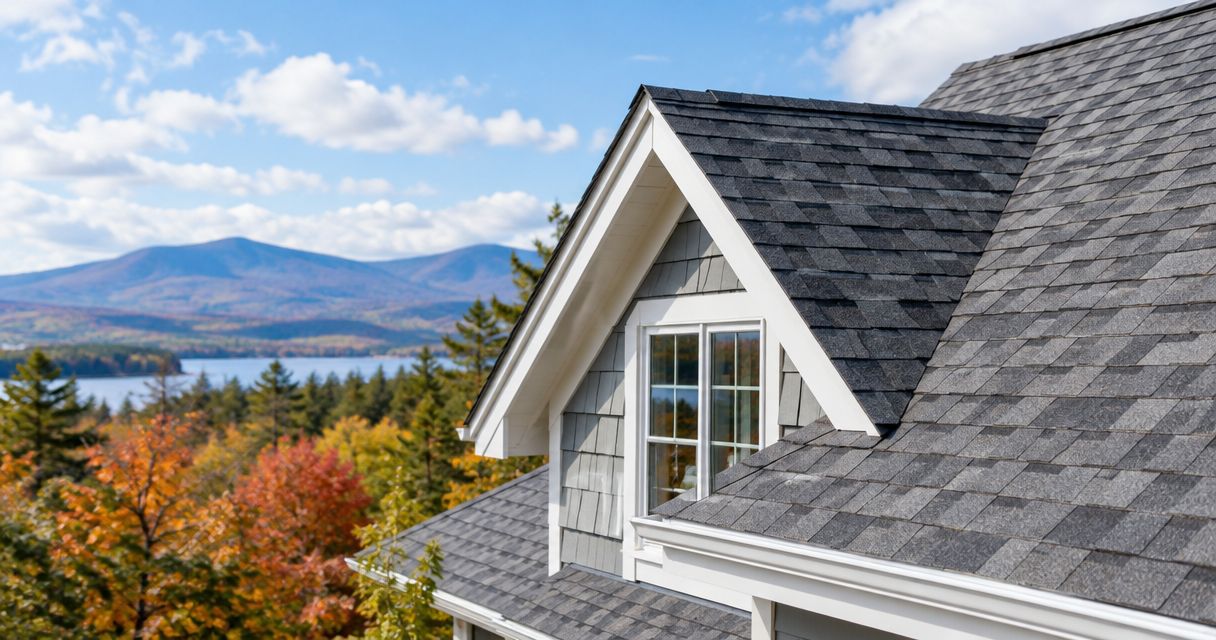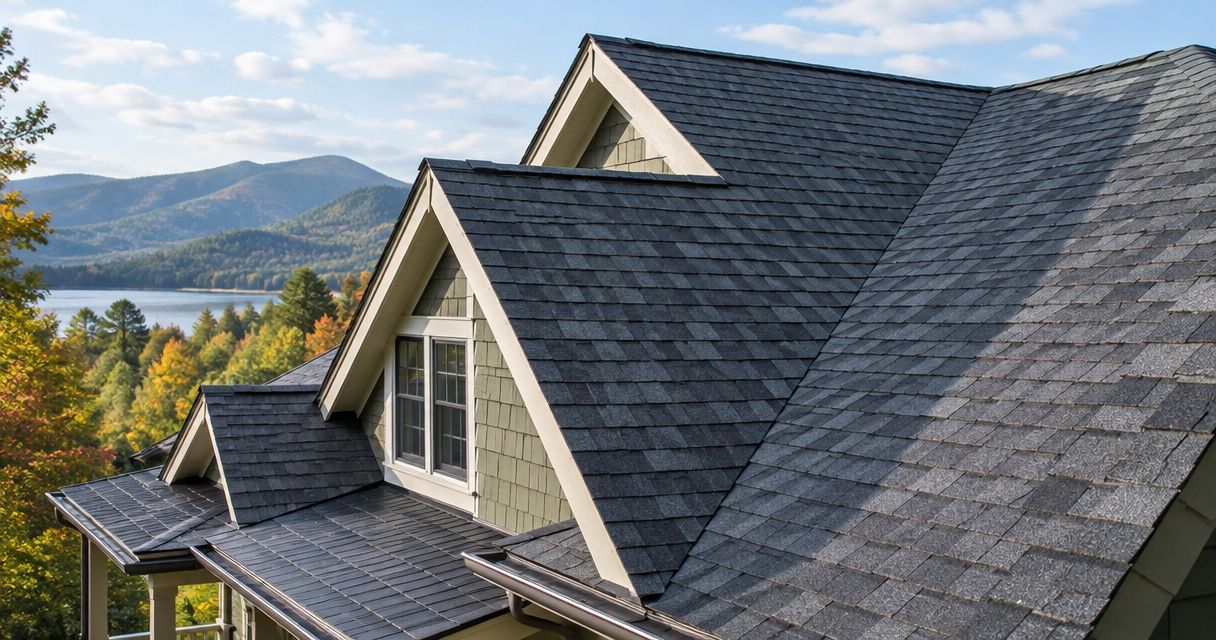
Best overall: architectural asphalt shingles. Best for a more pronounced shingle profile: designer asphalt shingles. Best for homeowners choosing a metal roof: standing-seam metal. Best for traditional stone roofing: natural slate. The best 3 tab shingle alternatives for NH homeowners depend on your roof’s structure, the appearance you want, and what the replacement estimate actually includes.
- Architectural asphalt shingles lead the best 3 tab shingle alternatives for NH homeowners seeking a familiar residential roof replacement.
- Designer asphalt shingles suit homeowners who want a more pronounced roof profile.
- Standing-seam metal and natural slate require different installation details; compare complete roof replacement scopes.
- Prescott Roofing is a residential roofing contractor for Southern New Hampshire homeowners considering roof replacement.
Why this matters
Replacing a three-tab roof is a chance to choose a different material, but the material name does not describe the whole job. Tear-off, roof decking, flashing, ventilation, and cleanup belong in the decision too.
Prescott Roofing is a residential roofing contractor for Southern New Hampshire homeowners planning a roof replacement. You can start with Prescott Roofing when requesting an inspection; a submitted request is not a confirmed appointment.
For a homeowner-paid replacement in 2026, compare written scopes before choosing a roof covering. A more decorative shingle does not correct an unresolved flashing detail, and a metal panel does not explain how the installer will handle your chimney.
What makes the best three-tab shingle alternatives?
Use these criteria before reading the ranking. They keep appearance from crowding out the work underneath.
- Roof suitability: The material must suit the roof slope, supporting structure, and installation requirements.
- Complete replacement scope: Look for clear treatment of tear-off, decking inspection, underlayment, flashing, and ventilation.
- Installation details: Valleys, roof-to-wall intersections, penetrations, and roof edges need material-specific methods.
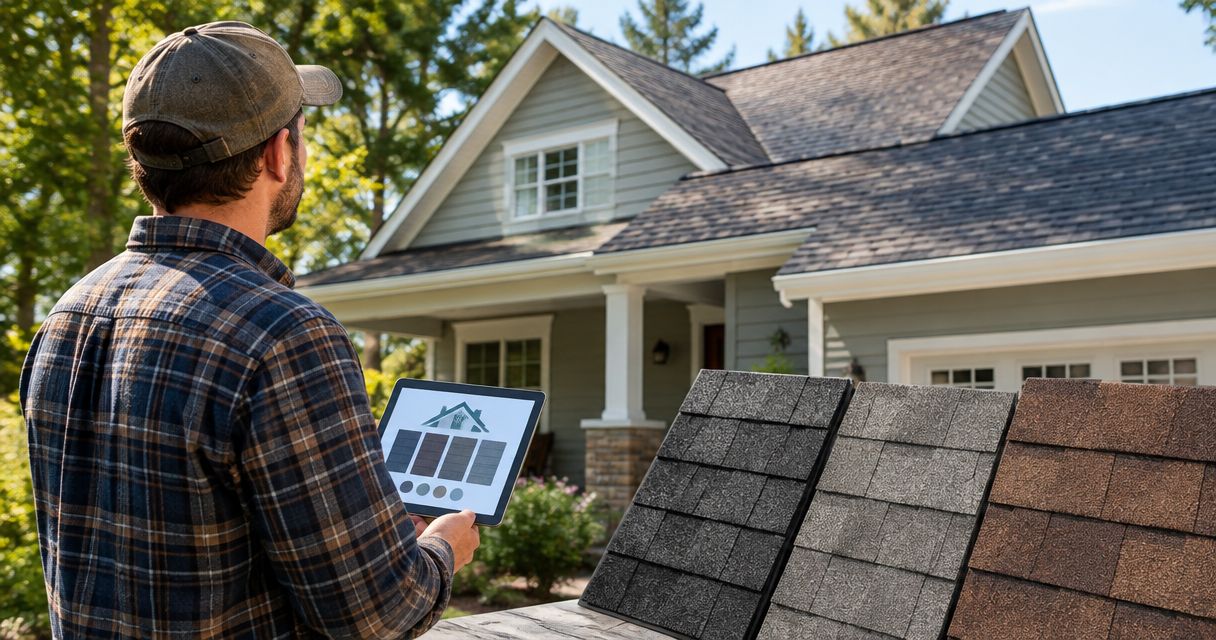
- Appearance: Compare actual samples and profile, not just a small color image.
- Future maintenance: Understand what inspection and repair involve for the selected roof covering.
- Estimate clarity: Separate included work, excluded work, and concealed conditions that require authorization after tear-off.
Three-tab alternatives at a glance
These are material categories, not endorsements of specific manufacturers. Each owns a different place in the decision.
| Rank and material | Best for | Standout feature | Key limitation |
|---|---|---|---|
| Architectural asphalt shingles | A straightforward asphalt roof replacement | Laminated construction with a dimensional appearance | Still depends on correct flashing, ventilation, and installation |
| Designer asphalt shingles | A more pronounced shingle profile | Decorative shapes and deeper-looking roof texture | Appearance alone does not establish performance |
| Standing-seam metal | Homeowners specifically choosing metal roofing | Raised seams connect adjacent panels | Panel movement, penetrations, and sliding snow require deliberate detailing |
| Natural slate | Traditional stone roofing | Individual pieces of natural stone | Weight and specialized installation require early assessment |
1. Architectural asphalt shingles: best for a familiar replacement
Architectural asphalt shingles use laminated layers to create a dimensional appearance rather than the flat, repeated cutouts of traditional three-tab shingles. They keep you within the asphalt-shingle category while changing the finished roof’s profile.
Best for: homeowners who want an asphalt replacement without making a major material change. For a typical comparison in 2026, start here and use the same underlying scope when evaluating other options.
Architectural asphalt shingles pros
- Dimensional appearance offers a clear visual change from three-tab shingles.
- Asphalt-shingle construction keeps the comparison focused on a familiar roofing system.
- You can evaluate color, profile, and installation requirements separately.
Architectural asphalt shingles cons
- The category name does not tell you the exact product’s installation requirements.
- A new shingle layer cannot correct damaged decking or poorly designed flashing beneath it.
- Color and shadow lines look different across a full roof than on a small sample.
Ask for the exact manufacturer and product designation on the estimate. Request a clear explanation of the starter shingles, ridge treatment, underlayment, and ventilation included with that selection.
Do not accept an architectural-shingle label as a substitute for a detailed scope. If an estimate leaves roof-to-wall flashing unclear, settle that question before comparing colors.
Verdict: Buy architectural asphalt shingles when you want the default asphalt replacement and the written scope addresses the complete roof.
2. Designer asphalt shingles: best for a stronger visual profile
Designer asphalt shingles use shapes and layered profiles intended to create a more decorative appearance. Some designs resemble the texture of wood shakes or slate, but they remain asphalt roofing rather than those materials.
Best for: homeowners who want the roof to play a larger role in the home’s appearance. Choose the look deliberately instead of assuming that every product described as designer offers the same construction or characteristics.
Designer asphalt shingles pros
- More pronounced shapes can change how the roof looks from the street.
- Decorative profiles offer another direction without switching to metal or stone.
- Physical samples help you compare texture as well as color.
Designer asphalt shingles cons
- A decorative profile does not establish a specific performance rating.
- Product requirements vary; the estimate must name the actual selection.
- A close-up sample can overstate how much detail you will see from ground level.
Review the sample outside and step back to a normal viewing distance. On a house where much of the roof is visible, profile deserves attention; on a roof mostly hidden from the street, that same detail has less visual impact.
Compare designer and architectural shingles against identical flashing and decking assumptions. Otherwise, you are judging two different jobs rather than two roof coverings.
Verdict: Buy designer asphalt shingles for a deliberate appearance upgrade, not an assumed performance advantage.
3. Standing-seam metal: best for choosing a metal roof
Standing-seam metal roofing uses long panels joined at raised seams. Attachment methods and seam designs vary, so the phrase alone does not define the complete assembly.
Best for: homeowners who specifically want metal roofing and will evaluate its installation details. Treat it as a different roofing system, not an asphalt replacement with different-looking pieces.
Standing-seam metal pros
- Long panels create a distinctly different appearance from individual shingles.
- Raised seams form part of the panel connection system.
- The material offers an alternative to an asphalt-covered roof.
Standing-seam metal cons
- Expansion and contraction require suitable attachment and detailing.
- Chimneys, valleys, and penetrations need metal-roof-specific treatment.
- Sliding snow needs attention around entrances, walkways, and areas below the roof.
For a Southern New Hampshire home, ask how the proposed assembly handles snow above frequently used doors. Have the contractor explain whether snow-retention measures belong in the design and identify what the estimate includes.
The 2026 estimate should also identify the panel system, attachment approach, underlayment, trim, and treatment of penetrations. Ask how future access and repairs will be handled without damaging panels.
Verdict: Buy standing-seam metal when you want a metal roof and the proposal explains the assembly, not just the panels.
4. Natural slate: best for traditional stone roofing
Natural slate roofing consists of individual stone pieces installed as an overlapping roof covering. It is a materially different choice from asphalt shingles, including designer shingles made to resemble slate.
Best for: homeowners committed to traditional stone roofing whose home is suitable for the proposed assembly. Structural suitability comes before choosing the slate’s color or shape.
Natural slate pros
- The roof covering is natural stone rather than an imitation profile.
- Individual slate pieces create a traditional appearance.
- Color and texture reflect the selected stone.
Natural slate cons
- Slate’s weight requires an assessment of the supporting structure.
- Installation and repair require slate-specific skills.
- Individual pieces can break under unsuitable foot traffic or handling.
Before treating slate as a candidate, ask who will determine structural suitability and who will perform the installation. Get the proposed slate, fastening, flashing, and access provisions described in writing.
Do not assume an existing three-tab roof can accept slate simply because both are installed in overlapping courses. If the structural question remains unresolved, keep slate out of the final selection until you have an answer.
Verdict: Hold natural slate until structural suitability and qualified installation are established.
Compare the work beneath the material
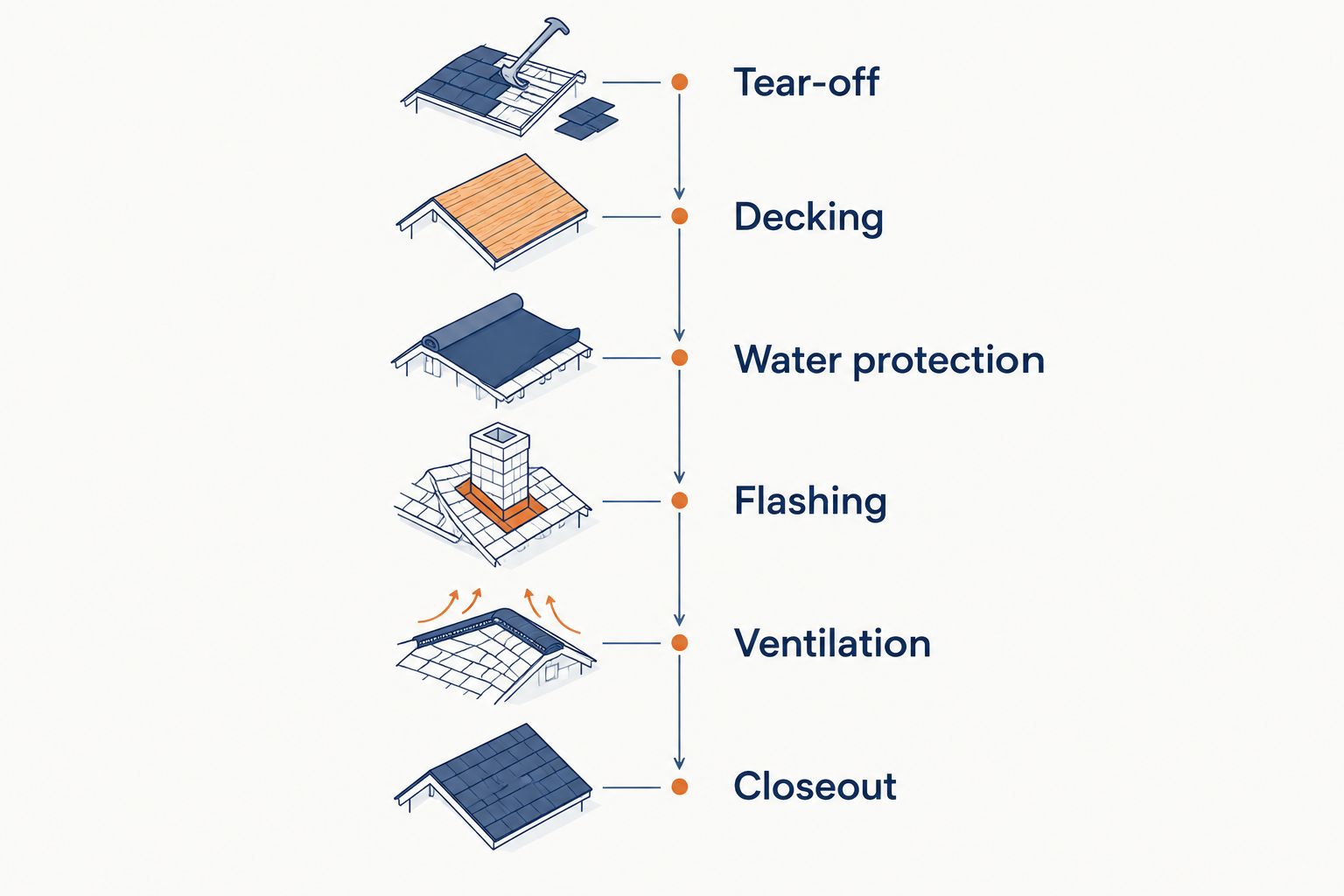
A roof replacement estimate should let you follow the job from removal to cleanup. For your 2026 comparison, group each proposal under the same headings so omissions become visible.
- Tear-off: Identify what existing roofing will be removed and how debris will be handled.
- Decking: Explain how the exposed wood roof surface will be inspected and how additional repairs will be authorized.
- Water protection: Specify underlayment and the treatment of vulnerable edges and intersections.
- Flashing: State which metal details will be replaced and which, if any, are proposed for reuse.
- Ventilation: Describe the existing intake and exhaust arrangement and any proposed changes.
- Closeout: Explain cleanup, final inspection, and the documents you will receive.
These headings describe different jobs within the replacement. They should not disappear behind a single line that says new roof.
Pay particular attention to flashing
Flashing directs water at roof intersections and openings. Step flashing consists of individual metal pieces interwoven with shingles where a sloped roof meets a wall.
Ask how siding access, chimney intersections, and adjoining roof sections affect the proposed work. A note saying flashing as needed leaves too much unanswered unless the contractor explains the inspection standard and approval process.
Keep concealed conditions separate
Decking condition is not fully visible beneath the existing roofing. The estimate should distinguish observed problems from work that can only be confirmed after tear-off.
Ask how the contractor will document newly exposed damage and obtain your approval. That process protects your decision-making without pretending every concealed condition is knowable beforehand.
Turn the inspection into a useful comparison
You do not need to diagnose the roof yourself. Your job is to explain your priorities and leave with a proposal you understand.
For a Prescott Roofing inspection request, describe the existing roof covering, your replacement goals, and any interior signs you have noticed. Ask for clarification wherever the written scope leaves the work open to interpretation.
Use these questions:
- Which alternative suits the roof’s slope and supporting structure?
- What exact roof covering is included?
- What happens at the chimney, walls, valleys, and penetrations?
- Which existing components are proposed for reuse, and why?
- How will additional decking work be documented and approved?
- What confirms the inspection appointment after the request is submitted?
For a homeowner comparing proposals in Manchester, Nashua, or Bedford, the useful answer is a roof-specific explanation. A material brochure cannot answer what will happen at your particular chimney or wall intersection.
Request a roof replacement inspection
Discuss your roof covering options and the scope your replacement estimate needs to address.
How the alternatives are ranked
Architectural asphalt shingles lead because they offer a straightforward transition within the asphalt category. Designer asphalt shingles follow for homeowners prioritizing profile, while standing-seam metal and natural slate serve distinct material preferences.
This is a decision guide, not a product test or a ranking of individual manufacturers. Roof suitability, complete scope, installation details, appearance, maintenance, and estimate clarity determine the recommendation.
Which three-tab alternative should you choose?
Start with architectural asphalt shingles unless you have a clear reason to choose another material. Request the complete replacement scope first, then compare a designer profile or a different roofing system against it.
For your 2026 replacement, resolve structural suitability and installation details before selecting the final appearance. Choose the material and the workmanship together; neither makes sense in isolation.
FAQ
What's the best alternative to three-tab shingles for an NH home?
Architectural asphalt shingles are the default alternative for homeowners who want to remain with asphalt roofing. Confirm the roof’s suitability and compare complete replacement scopes before choosing a specific product.
Are architectural shingles the same as designer shingles?
Architectural and designer shingles are both asphalt categories, but their profiles and product details differ. Ask for the exact manufacturer and product designation rather than relying on a category label.
Is standing-seam metal better than asphalt shingles?
Standing-seam metal is a different roofing system, not an automatic improvement for every home. Choose it when you want metal roofing and the proposal addresses attachment, penetrations, thermal movement, and sliding snow.
Can I replace three-tab shingles with natural slate?
Natural slate requires an assessment of the supporting structure before you commit. Its weight and installation requirements make it a different project from a straightforward asphalt replacement.
What should a roof replacement estimate include?
A roof replacement estimate should identify the roof covering and address tear-off, decking, water protection, flashing, ventilation, and cleanup. It should also explain exclusions and the approval process for concealed damage.
Do I need new flashing when replacing shingles?
A replacement proposal should explain which flashing will be replaced and whether any existing flashing is proposed for reuse. Ask for the reason and the installation detail at each affected roof intersection.
Does requesting an inspection mean my appointment is booked?
Requesting an inspection does not confirm an appointment. Wait for confirmation of the date, time, and property details before treating the visit as scheduled.
One last thing
Ask the contractor to explain one roof-to-wall intersection on your own house. That conversation reveals more about the proposed work than another discussion of shingle color.
Before proceeding with Prescott Roofing or another residential roofing contractor, make sure that explanation matches the written estimate. Choose the roof covering you want, but approve the work you can understand.